
The Torgny vineyard, rebirth of a thousand-year-old terroir
Between sun-drenched slopes and Lorraine tradition, Torgny's vines write a new chapter in Gaume's wine history, Belgium's southernmost.
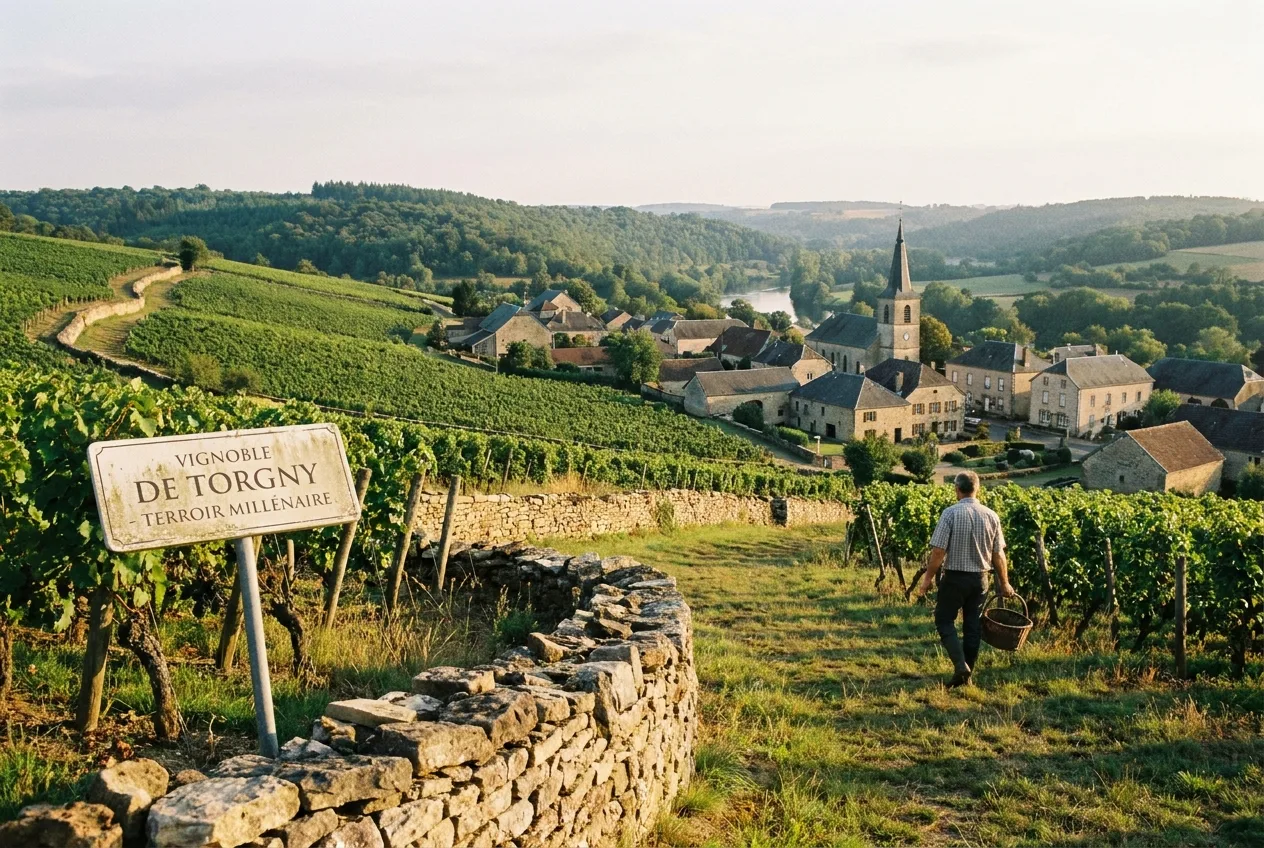
A vineyard with deep roots
Along the gentle slopes leading to Torgny, rows of vines draw geometric lines on the Gaume limestone. This wine-growing landscape, Belgium's southernmost, is no historical accident. As far back as Gallo-Roman times, these south-facing hillsides produced wine. Cistercian monks from Orval cultivated vines here in the Middle Ages, taking advantage of an exceptionally mild microclimate for our latitudes.
The proximity to French Lorraine is more than geographical. It explains why vine cultivation survived here when it disappeared elsewhere in Belgium. Winemaking knowledge crossed borders, carried by a common language — Gaumais — and shared traditions. Even today, the planted grape varieties (auxerrois, pinot noir, chardonnay) recall this Lorraine heritage.
A patient and determined renaissance
After decades of neglect, the Torgny vineyard has experienced gradual revival since the 1990s. Without fanfare or excessive promises, a few enthusiasts replanted abandoned plots, restored dry stone walls, and relearned ancient techniques. The limestone terroir, identical to certain Lorraine appellations, offered ideal conditions.
The approach remains artisanal, on a human scale. Harvesting is done by hand, often with family or neighbours. Production volumes remain modest, mainly destined for local consumption and curious visitors. This is no coincidence: winemaking in Gaume has never sought to compete with major vineyards, but rather to perpetuate a tradition, a connection to the land.
Torgny wine, ambassador of a terroir
Tasting a glass of Torgny white wine on a winegrower's house terrace means tasting a piece of living history. The wine remains light, fresh, marked by the limestone soil's minerality. It naturally accompanies local specialities: Gaume cheeses, charcuterie, touffaye. Each bottle tells of the winemakers' patience, the obstinacy of a village that refuses to let its traditions die.
The vineyard now attracts hikers and cyclists who follow the paths between vines. The Torgny wine trail allows visitors to discover different plots, understand the hillside exposure, and observe work throughout the seasons. In September, during harvest time, the village takes on the atmosphere of a wine festival, where Gaume conviviality mingles with terroir pride.
A future to cultivate
Climate change, paradoxically, could favour this northern vineyard. Warmer summers allow optimal grape ripening, where it was sometimes unpredictable in the past. But Torgny winemakers don't dream of industrial grandeur. Their ambition remains that of quality wine, rooted in its territory, witness to living heritage.
Between France and Luxembourg, between tradition and renewal, the Torgny vineyard embodies a certain idea of Gaume: that of a border region that preserves its particularities, cultivates its differences, and transforms its geographical constraints into assets. A philosophy found in every glass, provided you take time to savour it.
Want to discover the Gaume in person?
Six characterful houses, hot tub, walled garden — minutes from the sites we write about.
See the houses