
The asphodels of Virton, flowering embers of Gaume spring
Each late May, the limestone slopes around Virton blaze with creamy white: rare southern asphodels testify to an exceptional microclimate in the heart of Gaume.
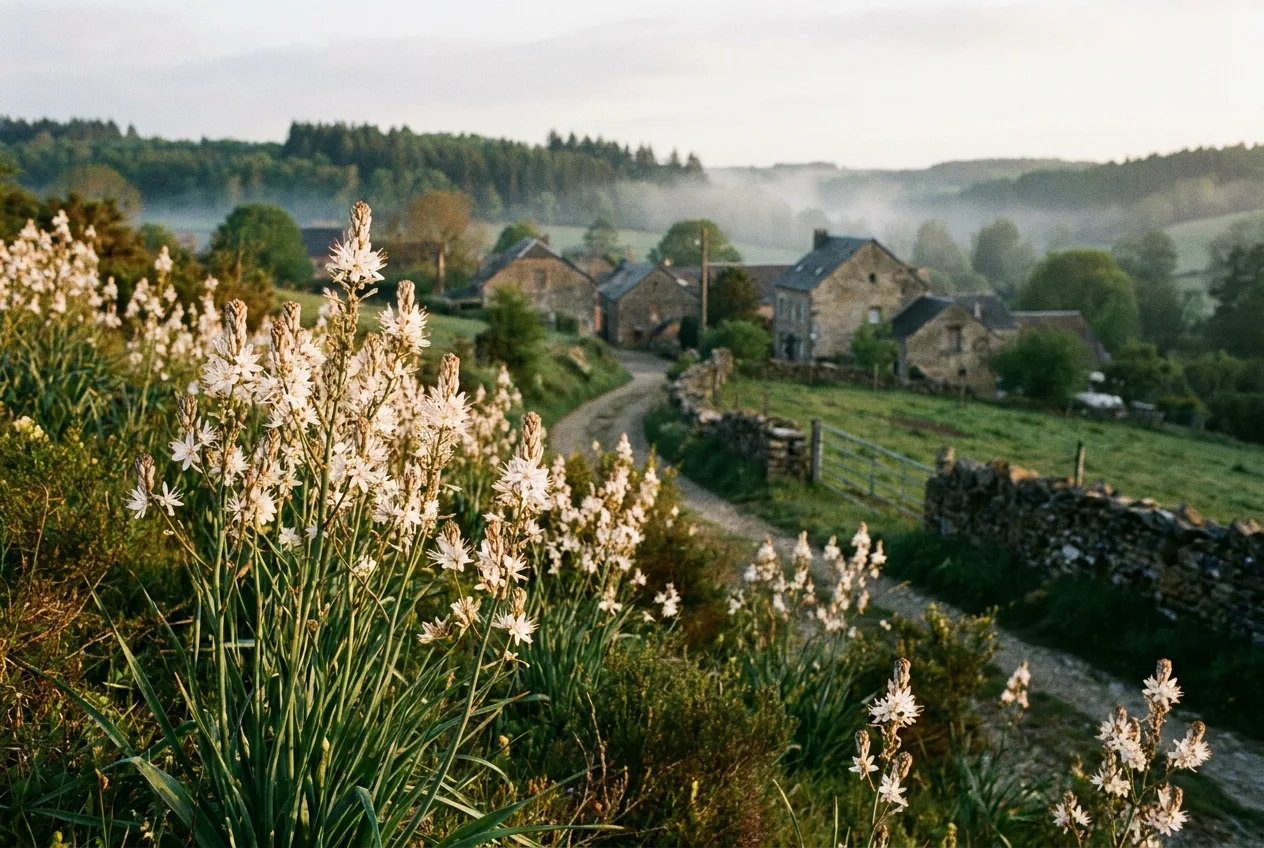
A spectacular bloom on sun-drenched slopes
At the cusp of spring and summer, the dry grasslands around Virton offer a rare botanical spectacle in Belgium. White asphodels (Asphodelus albus), perennial plants with upright flowering stems, transform certain hillsides into fields of light. These large creamy-white inflorescences, carried by sturdy stalks, evoke Mediterranean scrublands more than the neighboring Ardennes landscapes.
This unexpected presence is explained by the combination of limestone soil, south-facing exposure, and a climate slightly warmer than elsewhere in Belgium. Gaume, protected from prevailing winds by the Ardennes plateau, enjoys generous sunshine and average temperatures one to two degrees higher. A microclimate that allows southern species to find refuge here, at the northern limit of their distribution range.
A natural heritage to preserve
Asphodel meadows have become rare. The abandonment of extensive grazing, land cultivation, or gradual encroachment threatens these open environments. Only adapted management — late mowing, light grazing by sheep or goats — maintains these calcareous grasslands. Without intervention, bushes invade the terrain and asphodels disappear, unable to compete with woody plants.
Certain Gaume nature reserves, managed by conservation associations, actively preserve these habitats. Botanists regularly census asphodel populations, monitor their health, and adapt management practices. This attention is significant: along with wild orchids, gentians, and other thermophilic plants, asphodels constitute a valuable indicator of the ecological quality of dry grasslands.
Observe without disturbing
The asphodel bloom, which extends from late May to early June, attracts some botany enthusiasts. The stems can reach one meter in height, facilitating distant spotting. The flowers, gathered in slender clusters, open progressively from bottom to top. Each white corolla bears a greenish or brownish median vein, a delicate detail visible up close.
To contemplate them, it's best to stay on marked trails and avoid trampling the grasslands. These dry environments, seemingly robust, are actually fragile: repeated passage compacts the soil, disturbs microfauna, and can damage the underground bulbs from which asphodels regrow each year. A pair of binoculars often suffices to appreciate the beauty of these "flowering embers" without compromising their future.
In Gaume's natural calendar, asphodel flowering marks a singular moment: when spring tips into summer, when light becomes more intense, when meadows shift from tender green to golden. A fleeting instant, to be savored with the same patience accorded to deer rutting or woodruff gathering.
Want to discover the Gaume in person?
Six characterful houses, hot tub, walled garden — minutes from the sites we write about.
See the houses